Pennys
Judith Hopf / Alf Lechner


Pennys
Judith Hopf / Alf Lechner
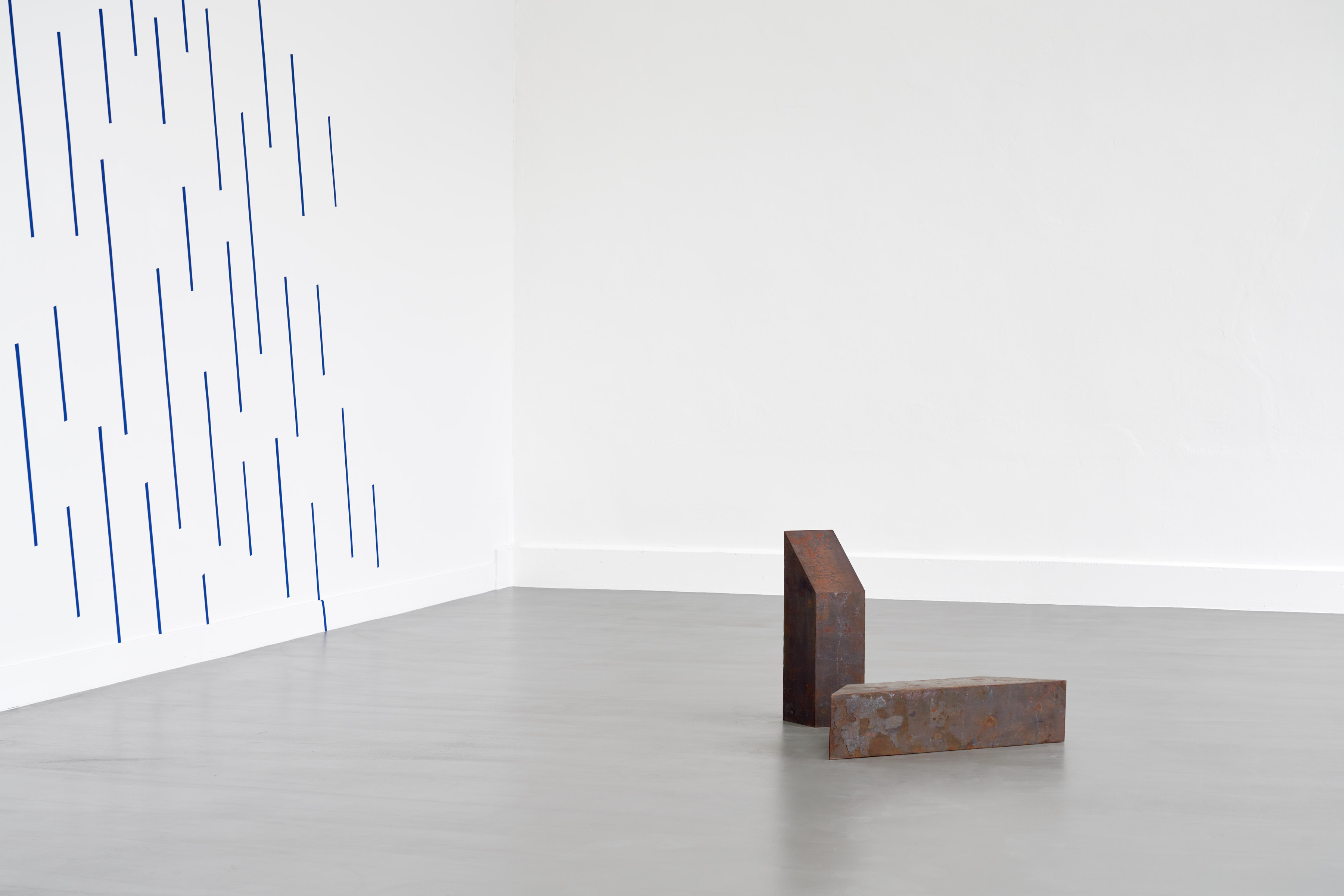
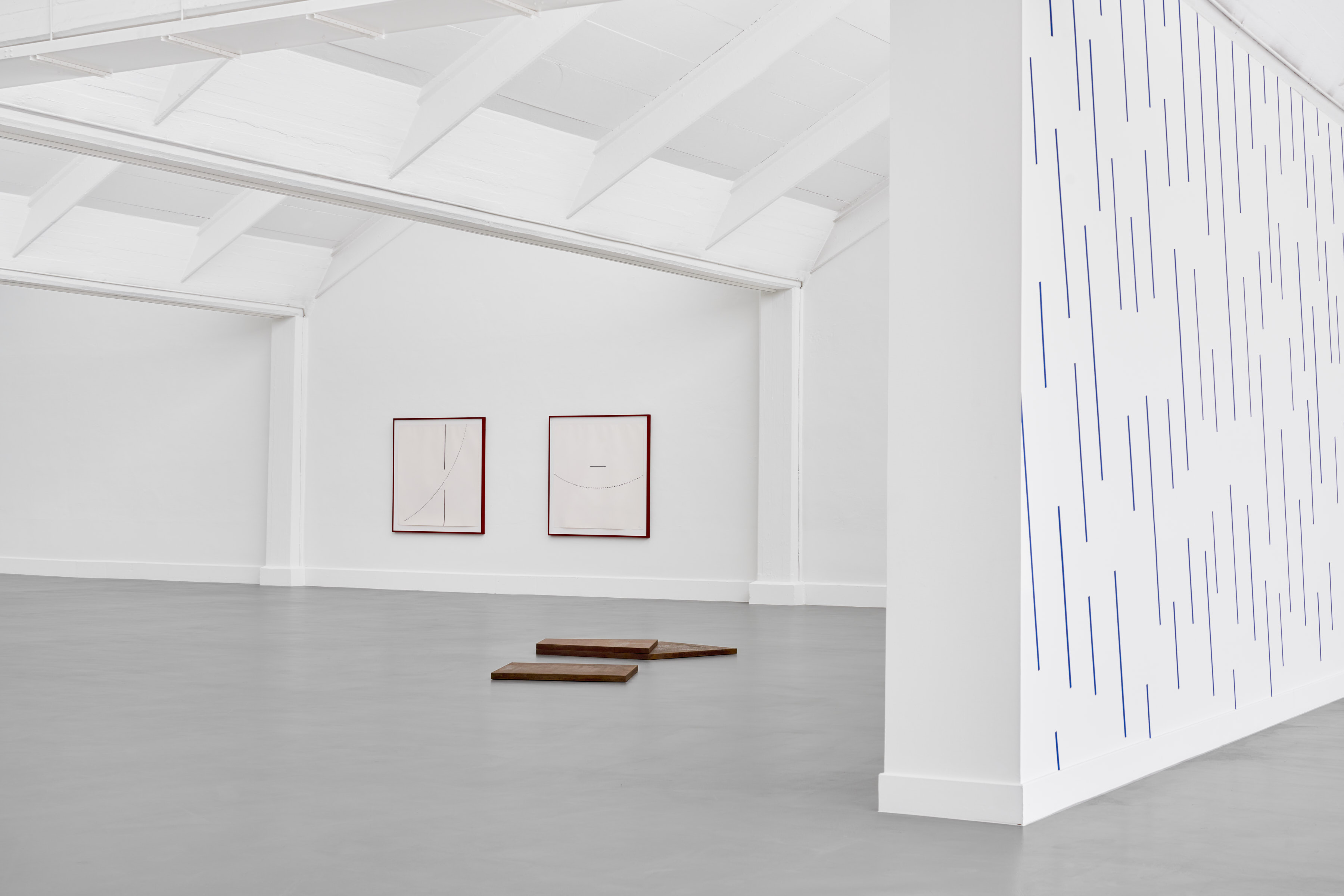
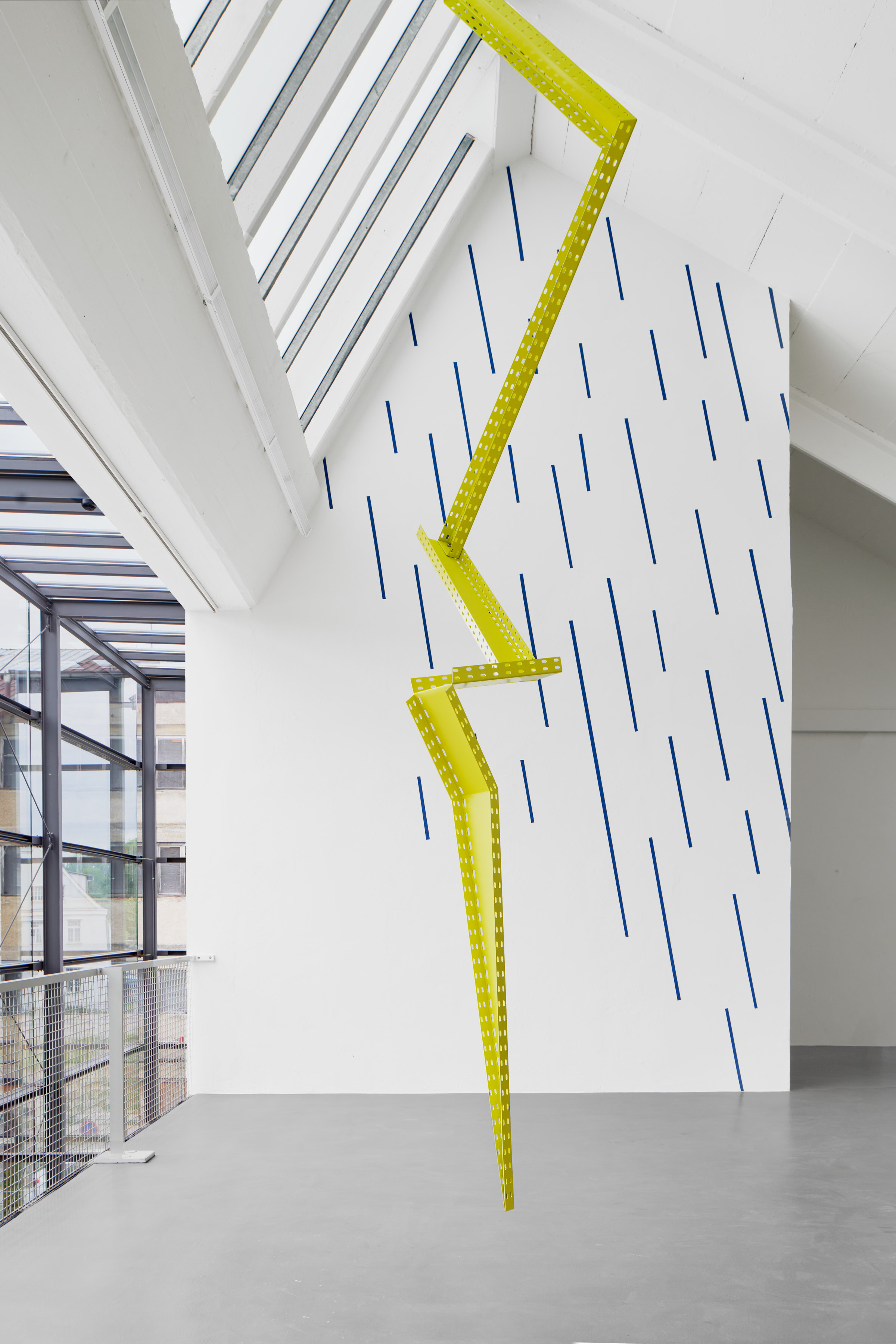
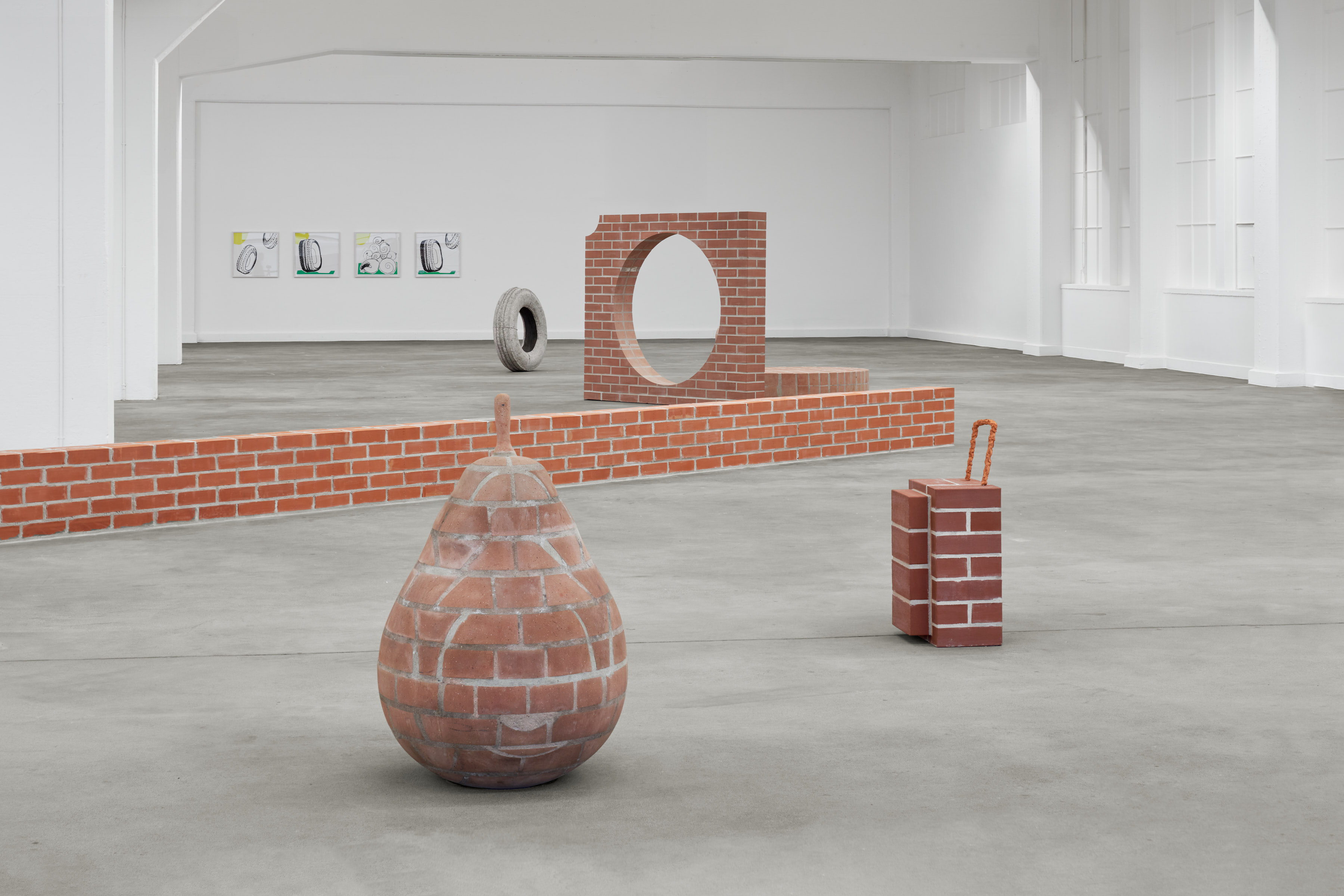
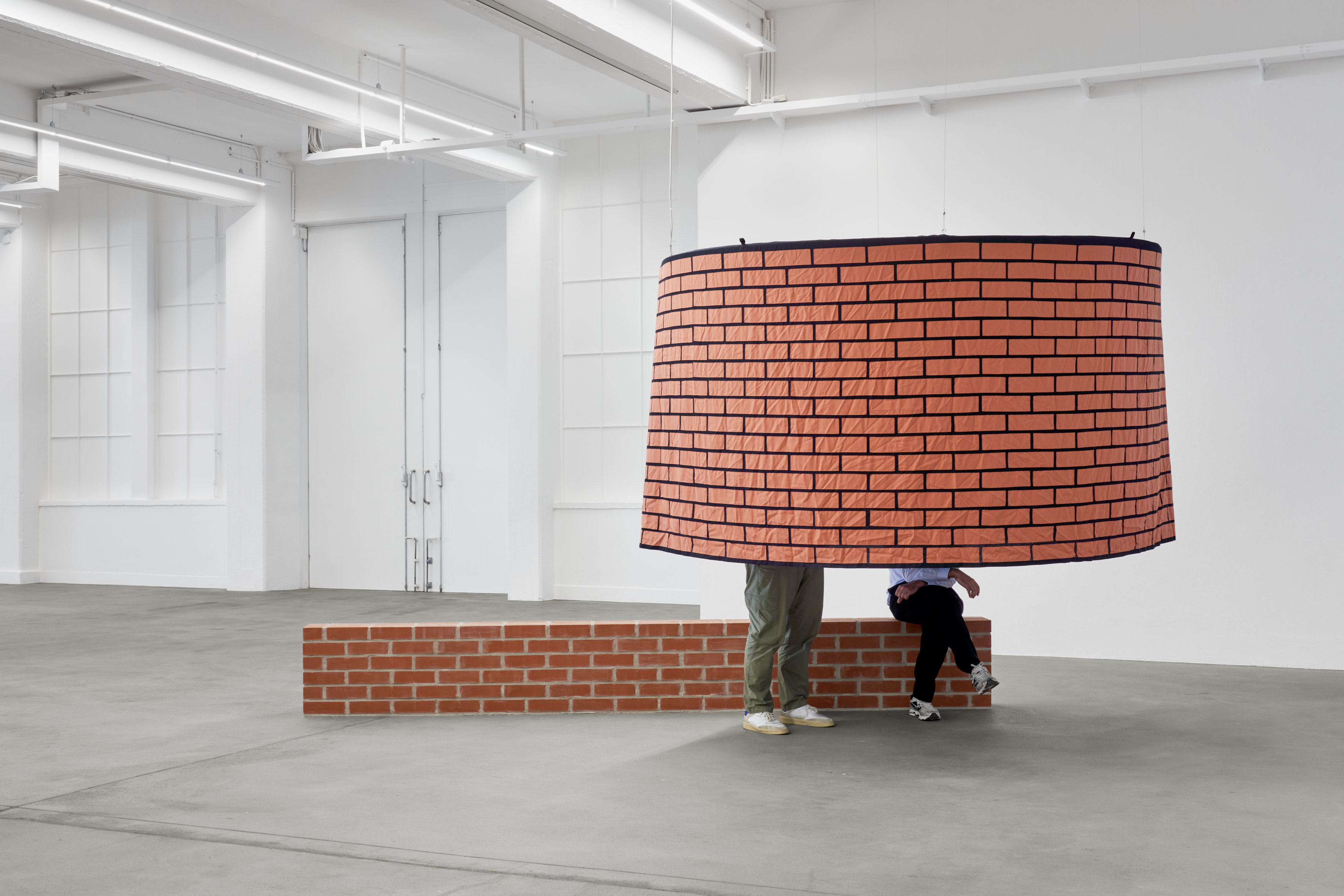
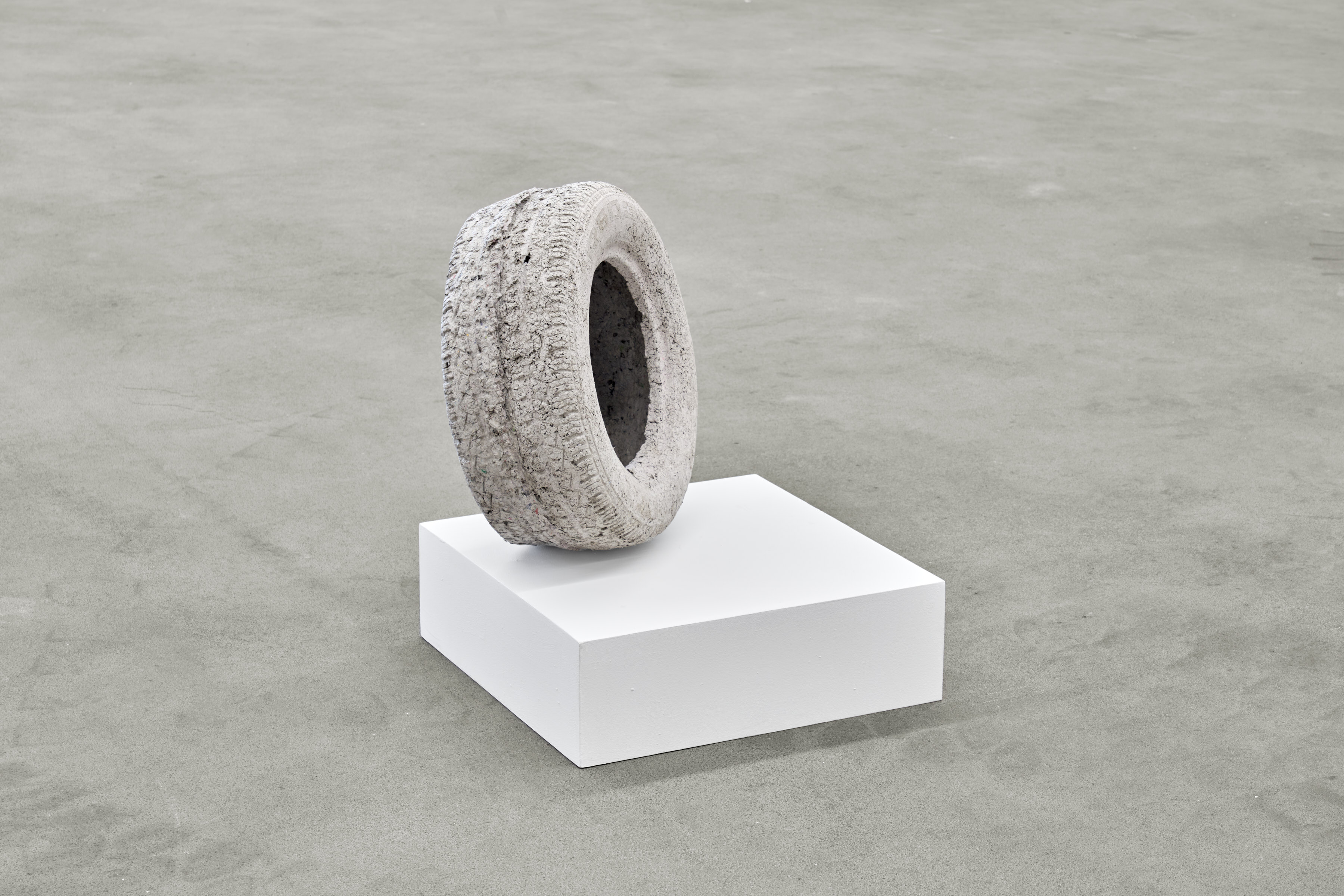
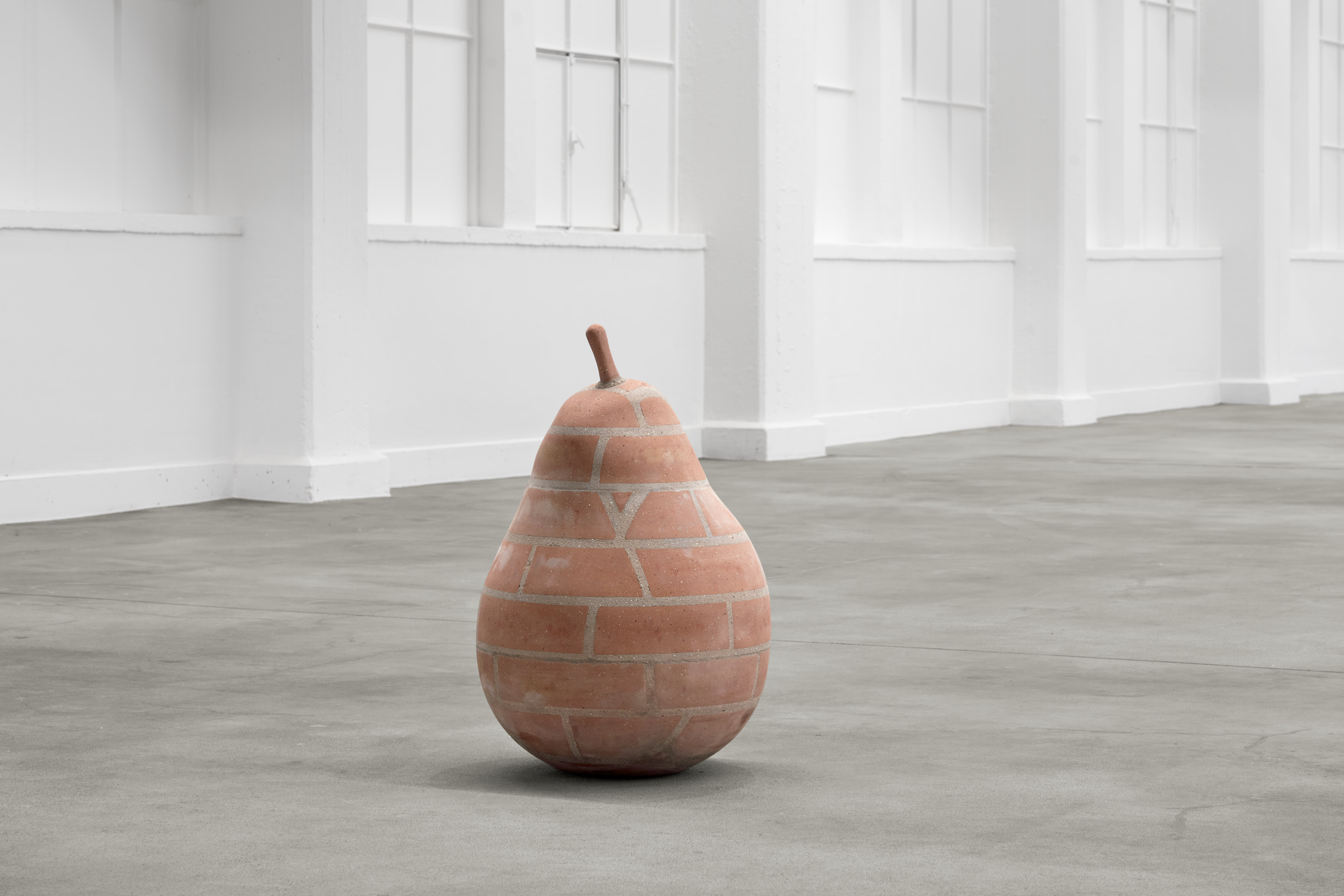
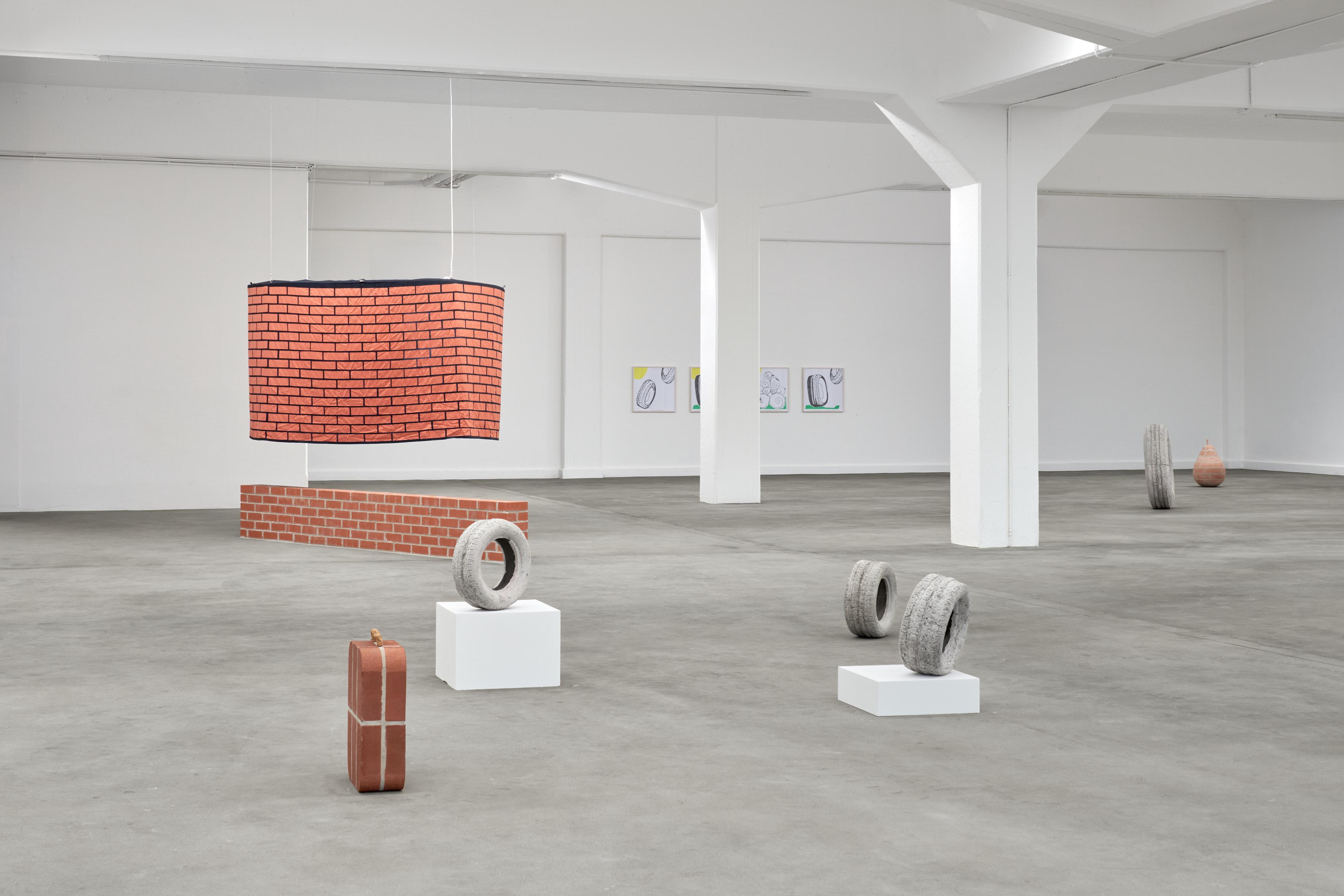
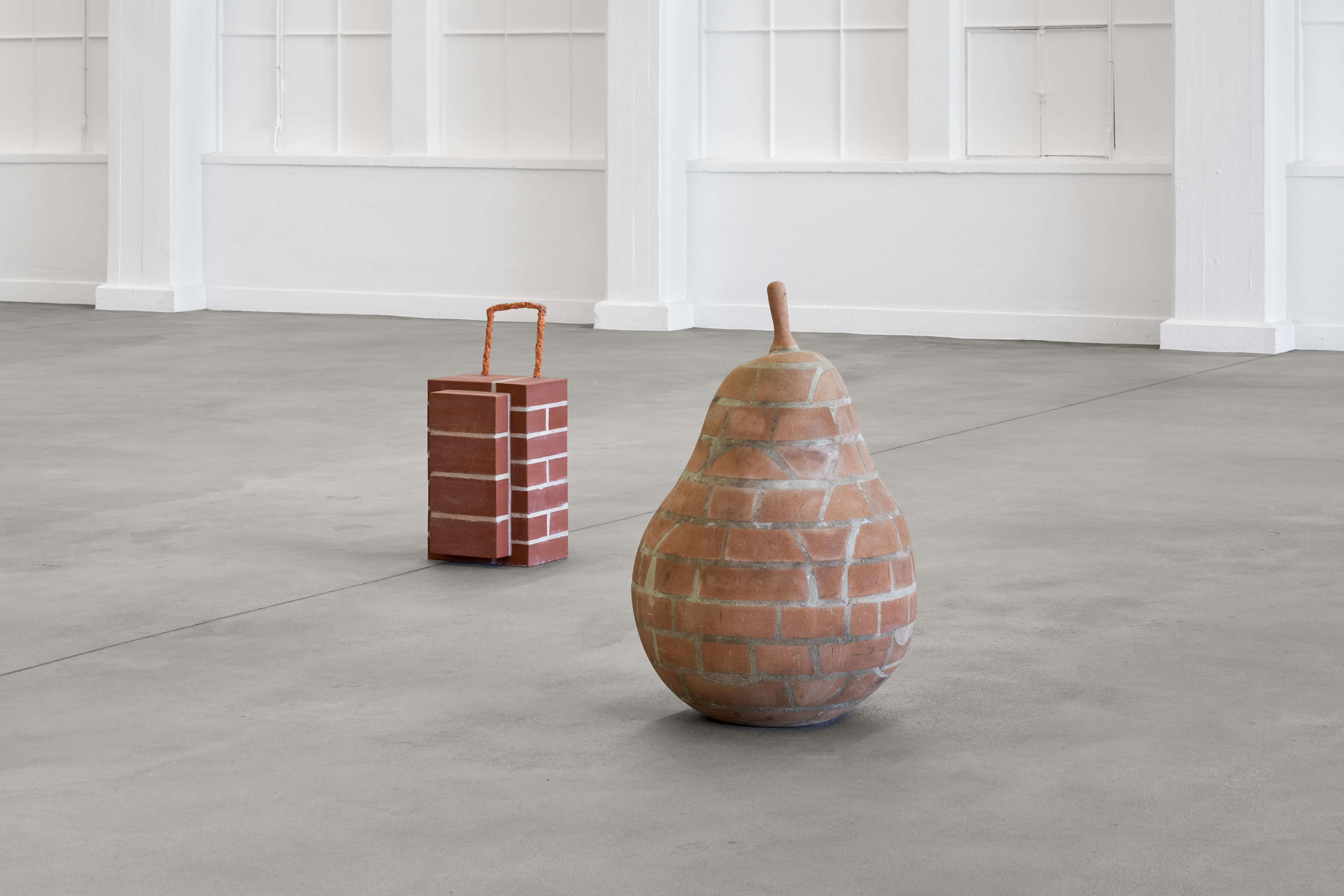
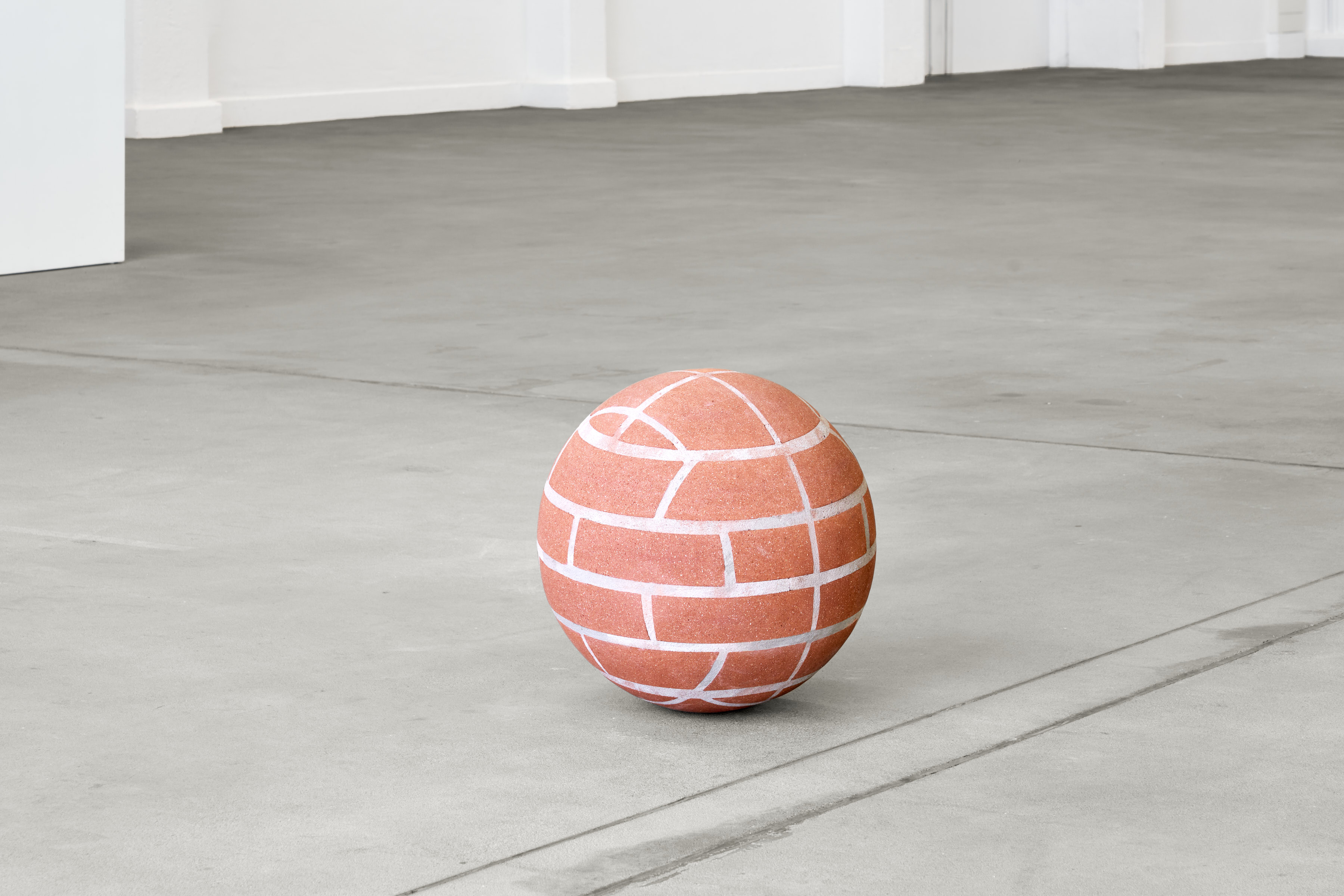
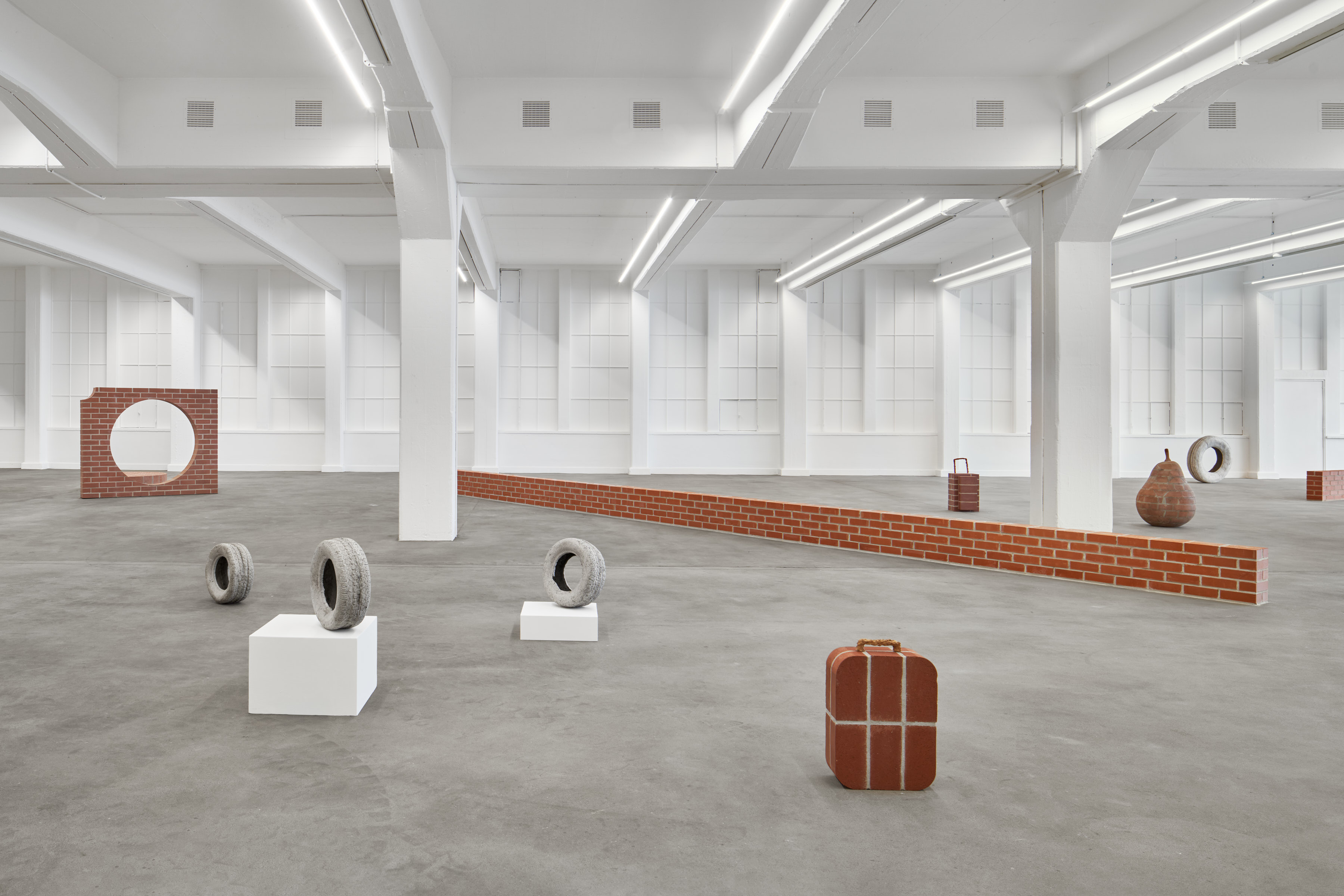
Walls, tires, spheres, suitcases—many of Judith Hopf’s motifs originate from a constructed world. Objects that promise stability or mobility behave differently than expected. They escape their intended function and become unreliable artifacts. A suitcase made of bricks; walls that open; tires that lose their balance and threaten to overturn. The wheel, as a symbol of movement, inventiveness, and progress, points to the promise of ceaseless circulation. In Hopf’s work, this movement appears suspended; it is a cycle that no longer repeats itself. In the exhibition, this tension condenses into a weather phenomenon: a yellow lightning bolt hangs from the ceiling, rain showers sweep across the walls. They do not form a landscape, but rather a condition that is gathering yet remains in a state of limbo.
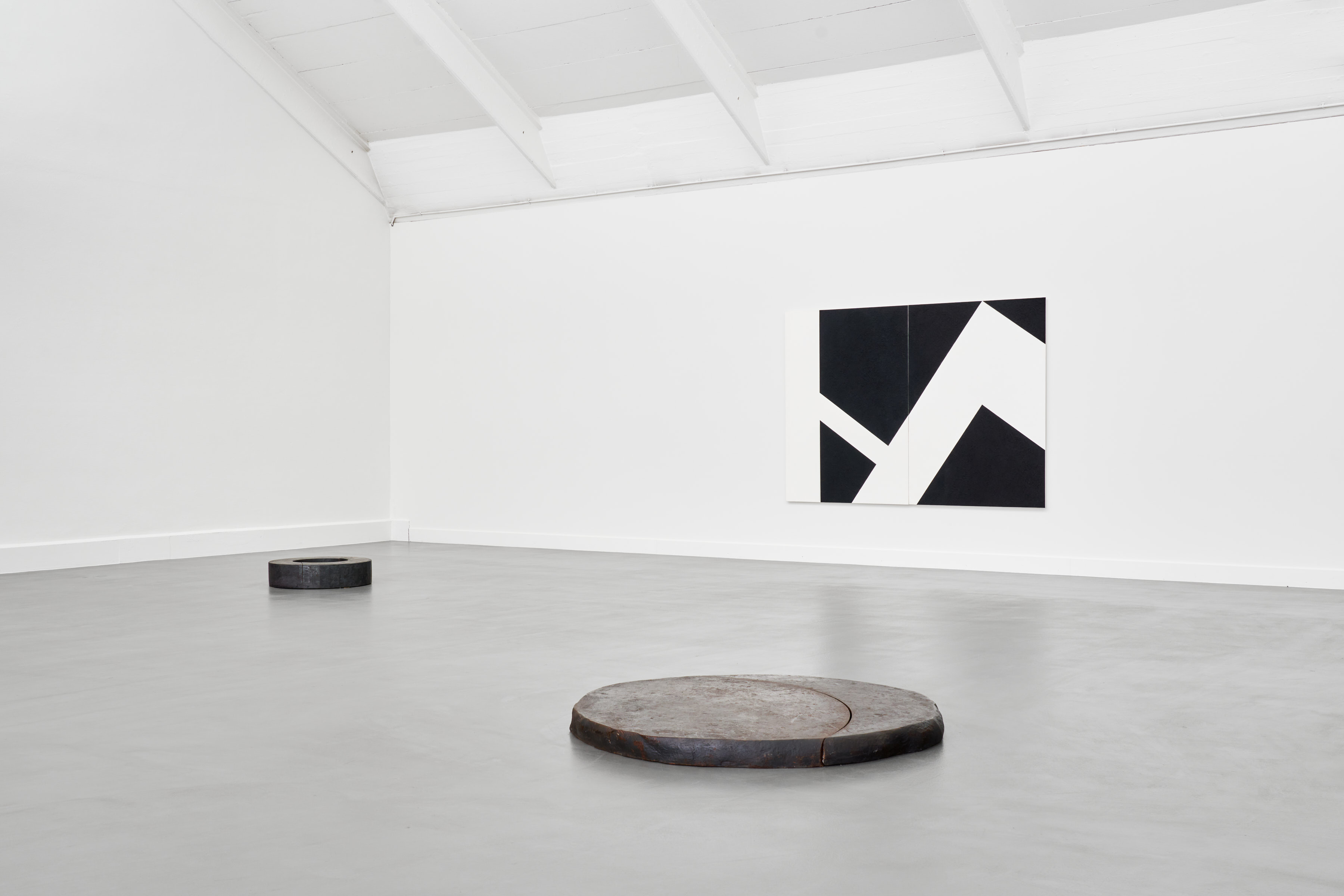
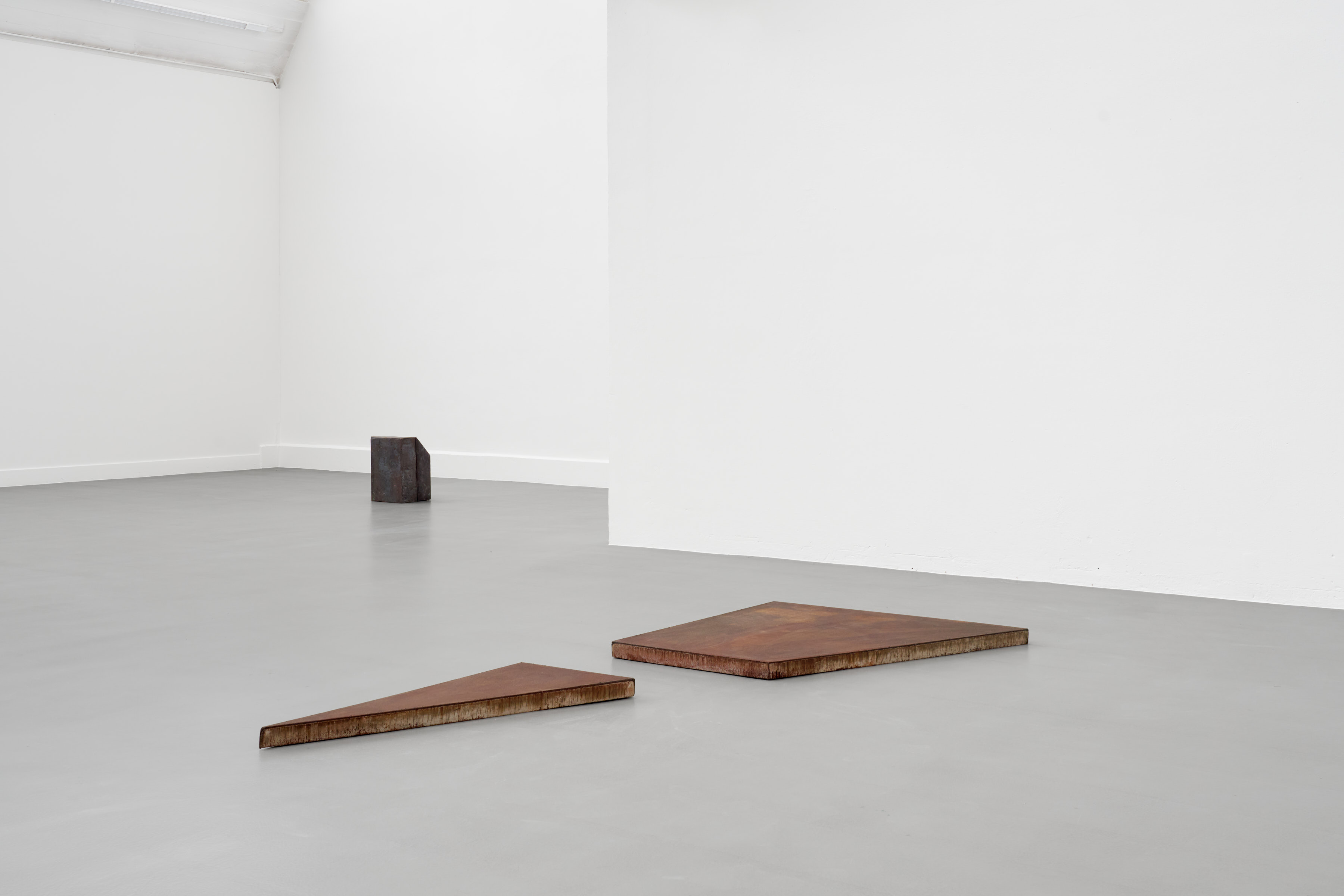
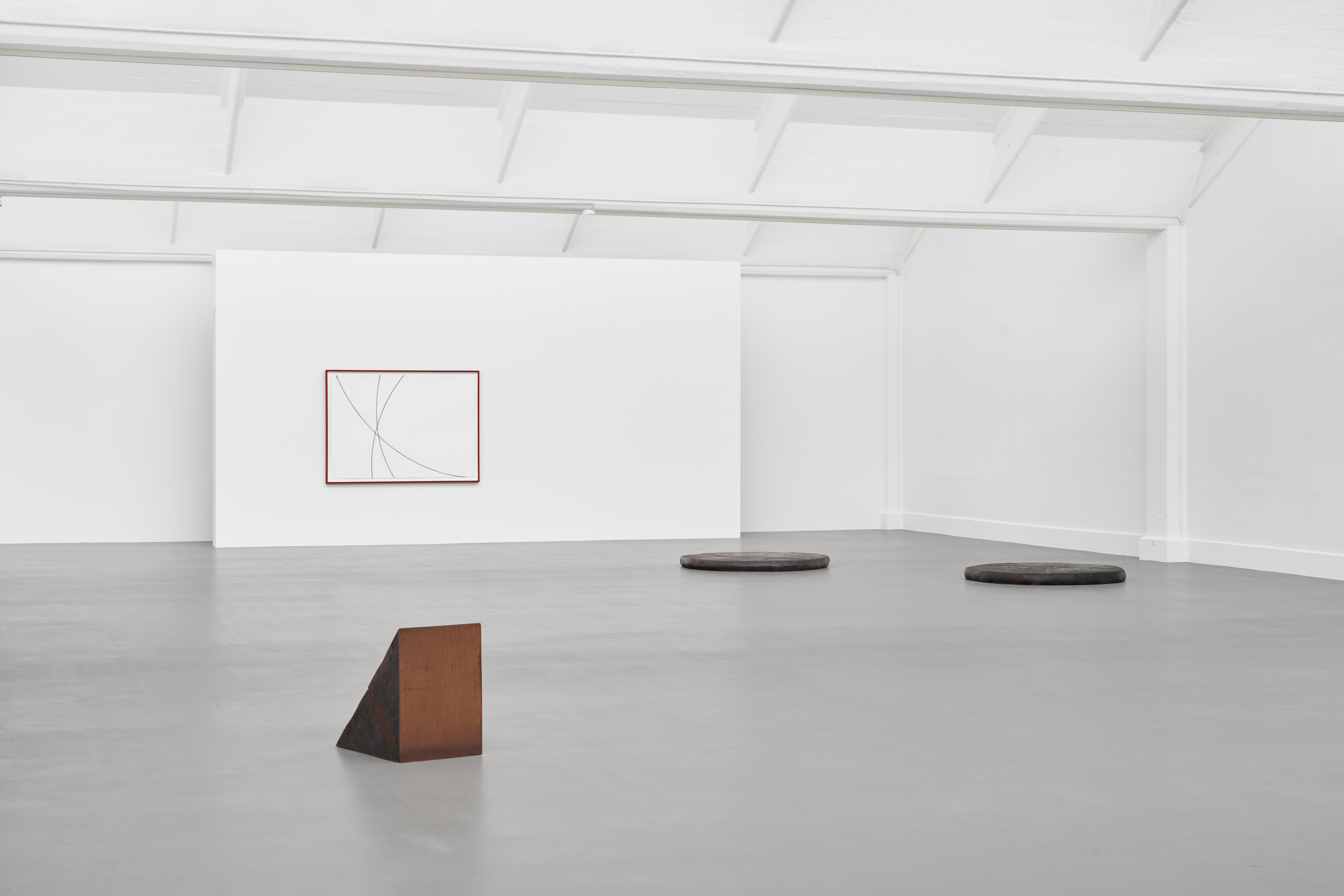
Works by Alf Lechner are exhibited in dialogue with Hopf. These are forged and rolled steel forms that have been subjected to pressure, divided, and rearranged. Some of them appear compressed, almost coin-like, as if they had lost their original shape and, under pressure, had become a new form of value. Alongside these are works made of sheet steel as well as large-format collages. They seem to suggest a direction, a movement forward; but perhaps also a reversal.
The exhibition captures moments when something starts to roll or comes to a standstill. Much seems to be in motion, yet remains stationary. The title “Pennys” follows this logic: small coins in constant circulation, changing locations yet often left behind. They pass through hands, pockets, and circulation as the smallest form of value that remains once the big money has left the pockets. At the same time, they are flat objects with weight, surface, and face value—suspended between circulation and stillness, stability and movement, order and displacement, possibility and impossibility. As if the whole thing depended on the small.
Judith Hopf works with sculpture, drawing, and short film, exploring defining aspects of everyday life. In her work, she repeatedly examines developments in communication media, the economy, and society, as well as their impact on the human condition. Hopf was born in Karlsruhe, studied art in Bremen and Berlin, and served as a professor at the Städelschule, the State Academy of Fine Arts in Frankfurt am Main, until 2025. That same year, she accepted a position at the Academy of Fine Arts Dresden. Her works are exhibited internationally in museums and galleries, including at dOCUMENTA(13) and most recently at the New Museum in New York.
Alf Lechner was born on April 17, 1925, in Munich. He initially worked as a metalworker and founded the company Litema in 1948. Beginning in 1957, he devoted himself to sculpture and created his first steel sculptures. His work repeatedly explores the relationship between technology and art, material and production, process and matter, as well as calculation and chance. Lechner founded the Alf Lechner Foundation in 1999 and opened the Lechner Museum in Ingolstadt in 2000. From 2001 until his death in 2017, he lived and worked with his wife Camilla in Obereichstätt.